
Compost made from human feces is rich in nutrients. It improves soil fertility, enhances its water retention capacity, and provides an alternative to chemical fertilizers
For almost twenty years, an organization based in the North of the country has been collecting and transforming fecal matter into compost, which is then sold to farmers.
Sustainable Organic Integrated Livelihoods (SOIL) is setting up portable toilets without flushing in several cities and localities, where dry materials, including bagasse, are added to human excrement to facilitate its decomposition.
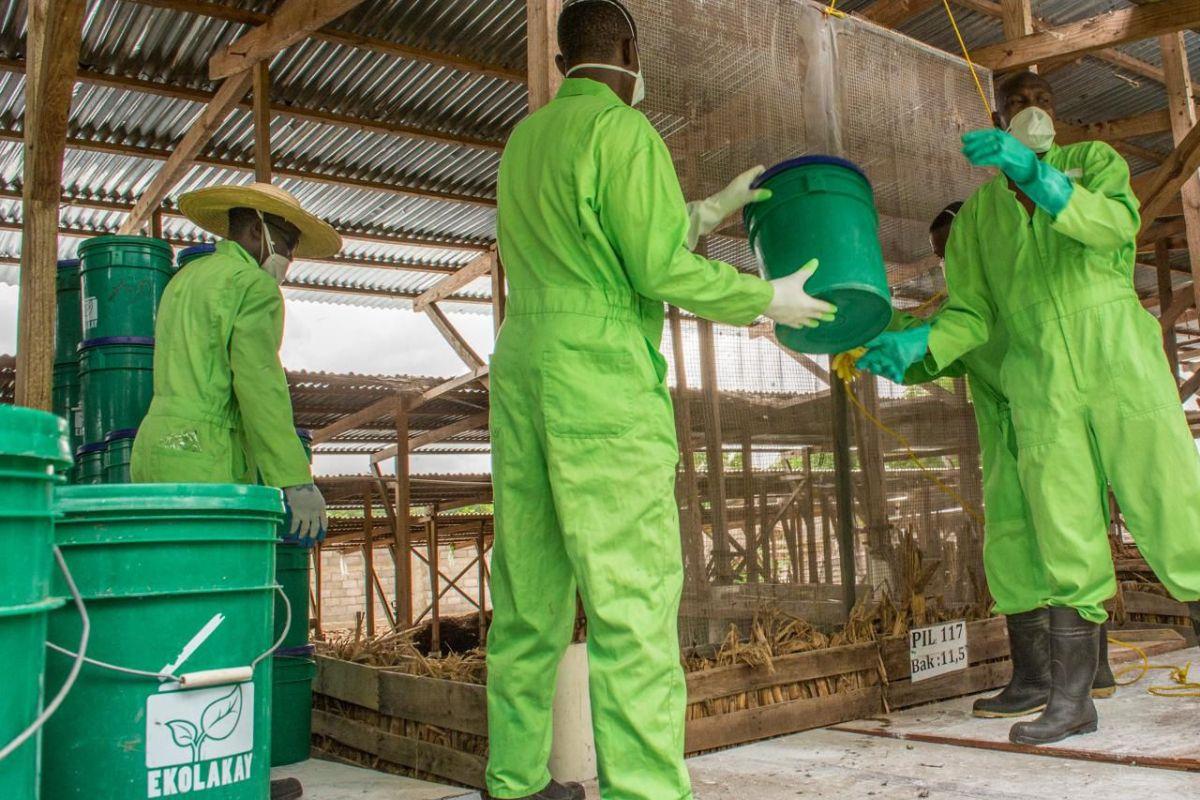
Excreta treatment in the middle of the composting site. February 20, 2025. Photo: SOIL
This initiative, launched in 2006, comes in the context of a sanitation crisis, where densely populated neighborhoods face significant health problems, exposing them in particular to waterborne diseases and contamination of their immediate environment.
More than 4,000 households, representing more than 20,000 people, are already using the home service offered by SOIL in several municipalities in the North and Northeast, including Cap-Haïtien, Quartier-Morin, Limonade and Caracol.
In Cap-Haïtien, more than a thousand families have already adopted SOIL toilets.
Sustainable Organic Integrated Livelihoods (SOIL) is setting up portable toilets without flushing in several cities and localities, where dry materials, including bagasse, are added to human excrement to facilitate its decomposition.
This is the case of Wisly Toussaint, who lives on Oswald Durand Street with his wife in Cap-Haïtien. In 2018, the couple did not have a toilet.
“We used to relieve ourselves in the open air, in plastic bags,” explains Toussaint. But for the past seven years, the family has switched to SOIL’s ecological toilets.
This initiative is better suited in a context of economic insecurity, says Toussaint, explaining that he cannot build his own sanitation system with a constant water supply.
The idea for SOIL emerged in the mid-2000s, when Sasha Kramer, an ecologist and current executive director of the organization, observed the devastating health effects of the lack of toilets in several densely populated urban neighborhoods, notably in Shada, Cap-Haïtien.
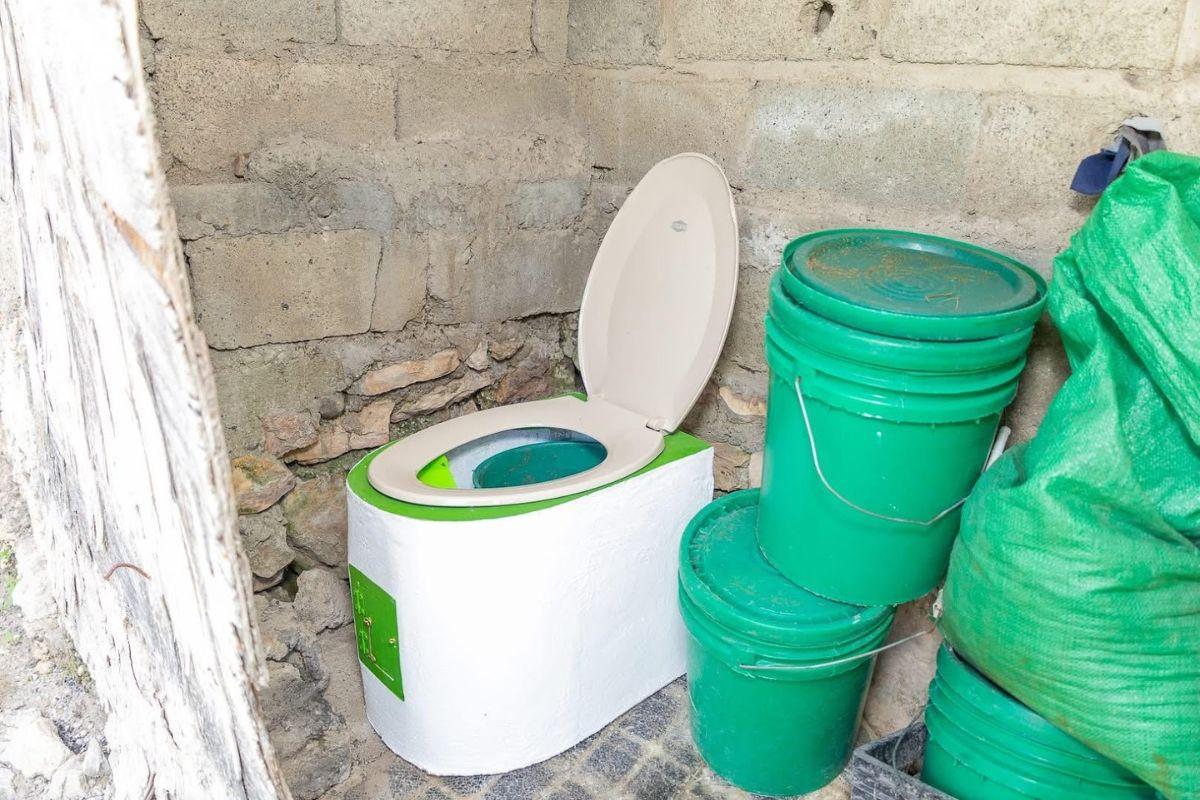
Installation of an Eko Lakay toilet in a home in Cap-Haïtien. Photo: SOIL
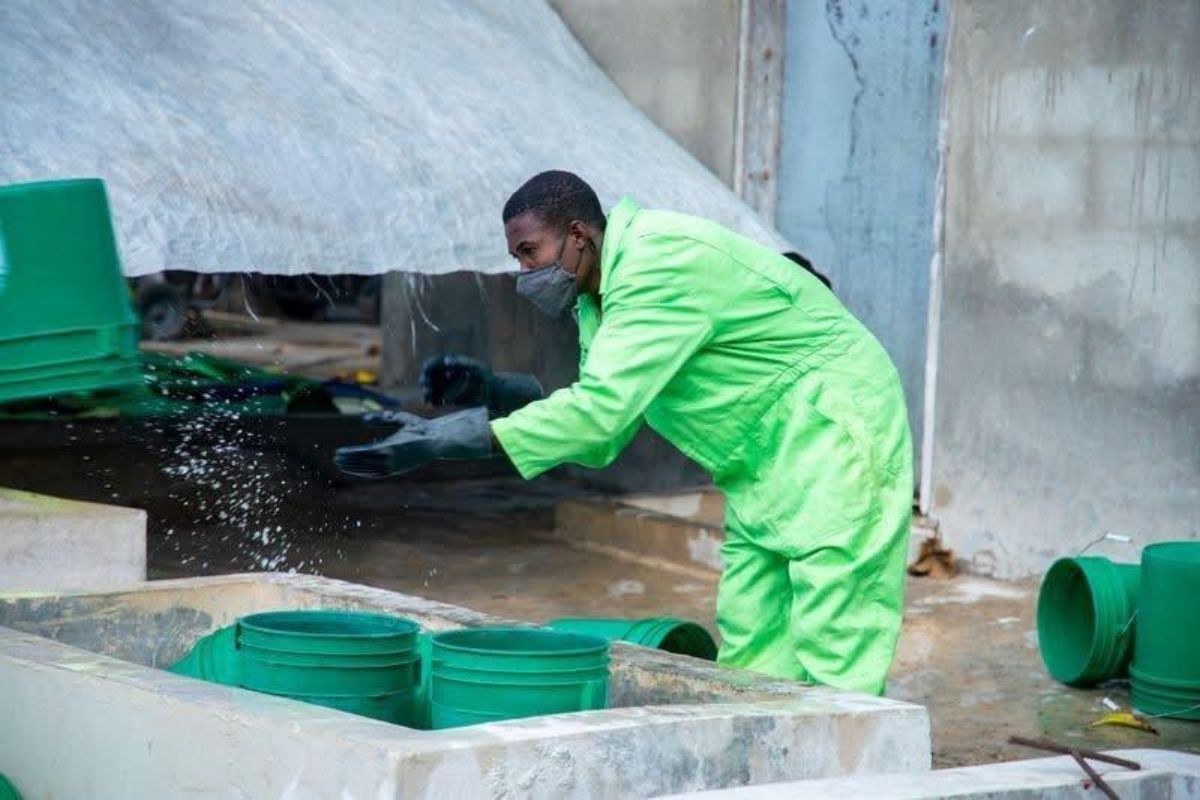
Cleanup operation at the SOIL treatment site in Limonade. Photo: SOIL
The entire country is facing a severe sanitation crisis. According to the World Bank, only 12% of solid waste produced in Haiti is collected, and just a tiny fraction is treated safely.
Through the « Eko Lakay » service, SOIL field agents collect household sanitary waste every week.
According to Beverly Pierre, an official within the institution, SOIL’s initiative is based on containerized sanitation. This system involves collecting excrement in sealed containers, which are then transported by field agents to treatment and composting facilities in Limonade.
Such a process reduces the risks of exposure to pathogens as well as environmental contamination.
From October 2024 to September 2025, approximately 1,345 metric tons of waste were processed. Between September 2024 and the end of 2025, the organization produced 345 tons of compost, sold in particular to farmers in Cap-Haïtien.
Join our WhatsApp channel by clicking on this link.
This compost is rich in nutrients. It improves soil fertility, enhances its water retention capacity, and provides an alternative to chemical fertilizers.
SOIL officials favor a sustainable composting model. According to research conducted with partner scientists, this composting generates less greenhouse gas than traditional methods, such as pit latrines or untreated waste dumping.
To benefit from the home installation of toilets offered by the organization, a fee of up to 350 gourdes is required monthly per household.
According to Nick Preneta, head of operations at SOIL, these fees cover 10 to 15% of the actual cost of the service.
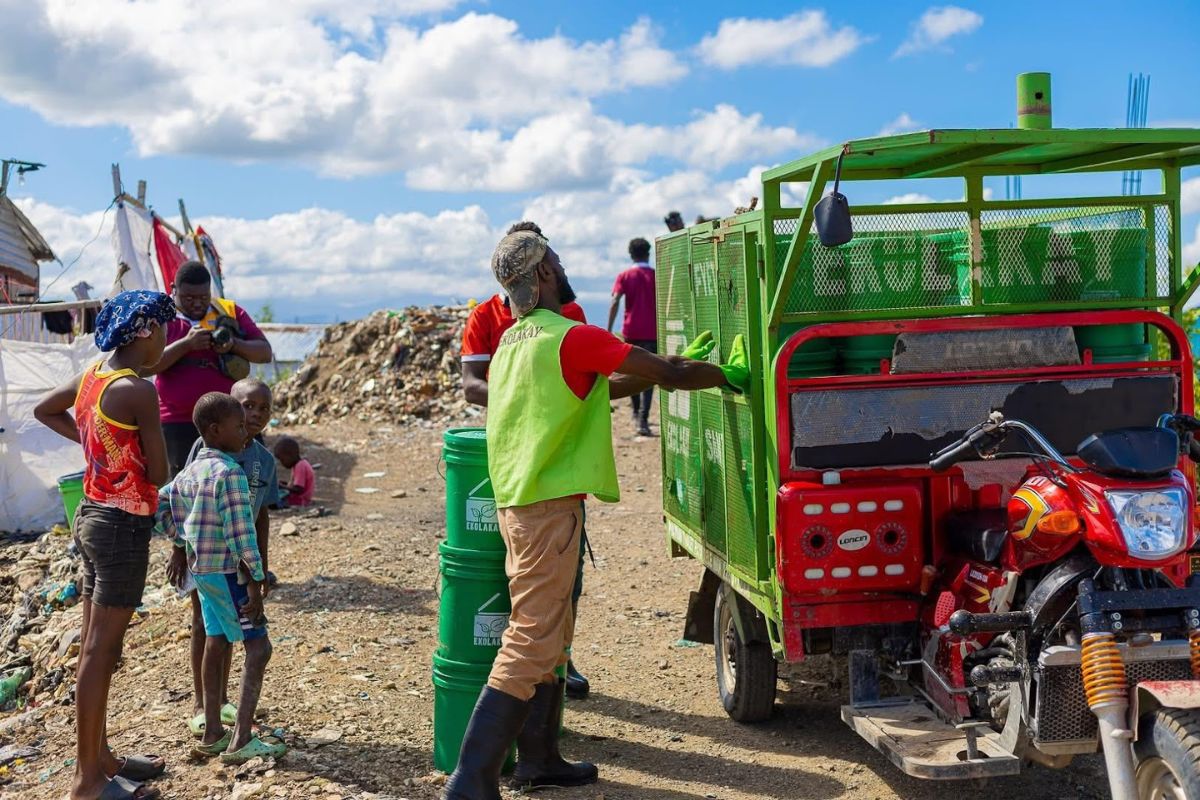
Transport of excreta collections by SOIL in a neighborhood in Cap-Haïtien. Photo: SOIL
The rest depends on external financing, particularly through results-based payment mechanisms, supported by the Inter-American Development Bank (IDB).
Some users, like Shelove Bernardin from Quartier-Morin, are using the service temporarily. « My house is still under construction, » she says. « While waiting for the work to be finished, we opted for this solution. »
According to the World Bank, 31% of the rural population in Haiti still practiced open defecation in 2020.
In Cap-Haïtien, 11% of the population practices open defecation and 51% use different types of pit latrines, according to a report by the Shit Flow Diagram Promotion Initiative (SFD), supported by the Inter-American Development Bank (IDB), published in 2020.
According to this report, the vast majority of the population of Cap-Haïtien resorts to manual emptying and transport services when their sanitation system is full.
According to the World Bank, 31% of the rural population in Haiti still practiced open defecation in 2020.
This situation weakens the environment, in a context where the city does not have wastewater treatment and purification facilities.
According to a report by USAID and the National Directorate of Drinking Water and Sanitation (DINEPA), only two wastewater holding basins existed in the Aviation district in 2022.
But these basins appear outdated and, moreover, are located in a flood zone.
Wastewater is discharged directly into streets, courtyards and vacant lots, as well as into canals and ravines.
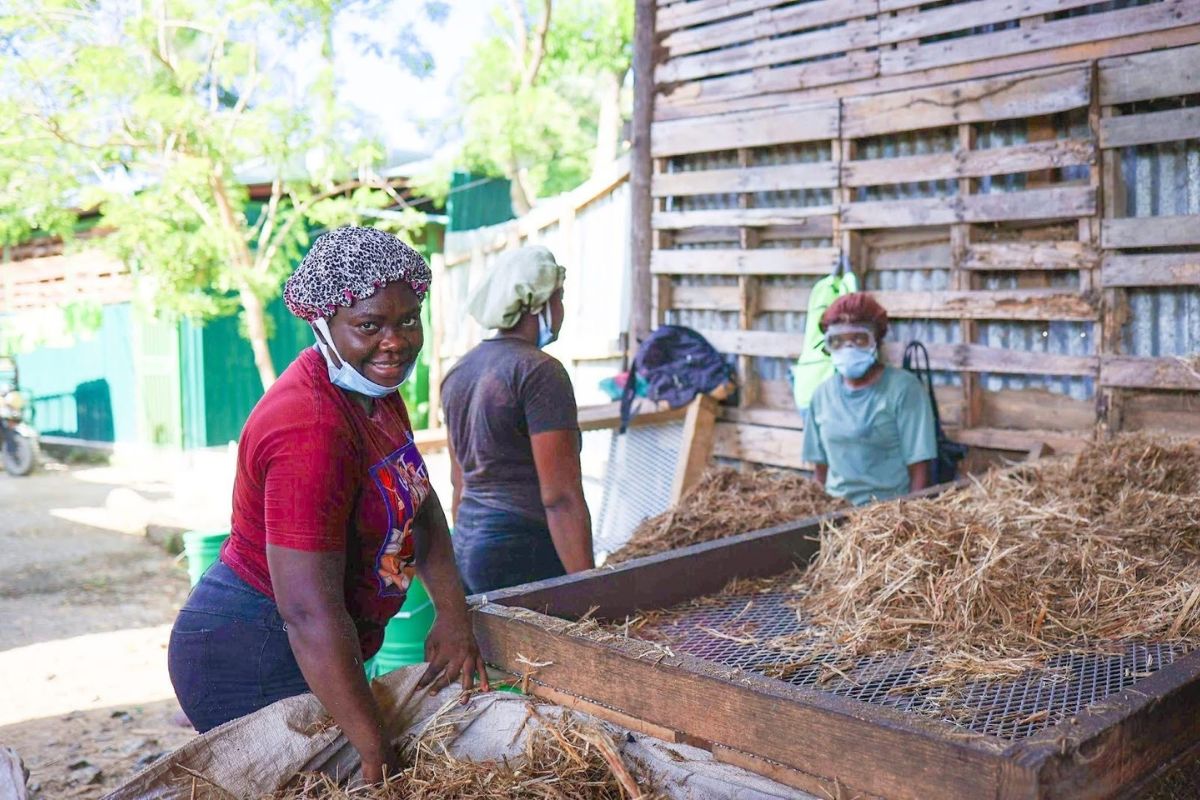
Women produce bagasse at the SOIL production workshop in Quartier-Morin, Cap-Haïtien. Photo: SOIL
The lack of sewage systems, urban density and economic insecurity make classic solutions — septic tanks or traditional latrines — difficult to apply on a large scale.
Beyond the « Eko Lakay » home service, SOIL has developed other ecological sanitation solutions.
According to Beverly Pierre, an official within the institution interviewed by AyiboPost, the organization offers the « EkoMobil » system, based on the same system, intended in particular for events, construction sites and certain agricultural activities in the department.
Read also : Grape production: A traditional crop under threat in southern Haiti
It also sets up « EkoMache », an ecological sanitation system installed in public markets, notably at the market on rue 9, in Cap-Haïtien, for traders and users.
Wisner Jean-Louïs, head of human resources within the organization, indicates that « to date, SOIL has 83 local staff members, distributed between the Eko Lakay programs, composting, sales, research, administration and human resources, as well as eight international employees. »
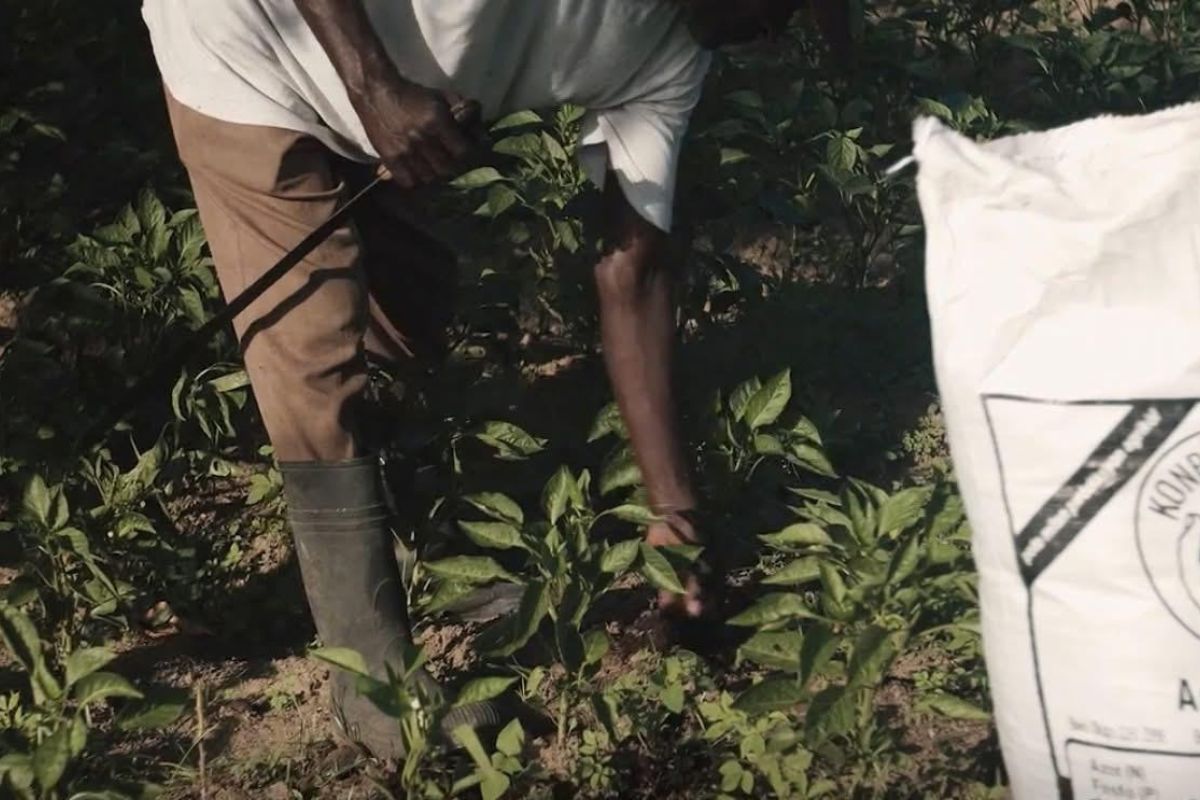
A farmer in the middle of his field with Konpòs Lakay, a product offered by SOIL. Photo: SOIL
SOIL’s initiative is part of the Container Based Sanitation Alliance (CBSA), a global alliance working towards the widespread adoption of container-based sanitation.
Present in at least eighteen countries, including Bolivia, Kenya, India, the United Kingdom, South Africa and the United States, this alliance brings together organizations committed to alternative sanitation solutions.
Organization officials claim to be developing a sanitation services model that guarantees access for all, while implementing sustainable and replicable solutions in other regions of the country.
“We do not consider fecal matter as useless waste, but as a central element of the transformation process,” Preneta told AyiboPost.
By : Lucnise Duquereste
Cover | The « Konpòs Lakay » compost offered by SOIL. Photo: SOIL
► AyiboPost is dedicated to providing accurate information. If you notice any mistake or error, please inform us at the following address : hey@ayibopost.com
Keep in touch with AyiboPost via:
► Our channel Telegram : Click here
►Notre Channel WhatsApp : Click here
►Our Community WhatsApp : Click here





Comments