
As the population grows, the real estate market in Cap-Haïtien is booming. « Sometimes, a simple room without a kitchen or living room is listed at $3,000 USD a year, which is equivalent to about 300,000 gourdes, » explains real estate agent Fanfan
Laure Jean-Baptiste fled Port-au-Prince in June last year due to insecurity to settle permanently in Cap-Haïtien where she was hosted by a relative and found work in a financial institution.
When the former Lalue resident wanted to rent out her own accommodation at the beginning of the year, she encountered a difficult reality: the cost of living is skyrocketing, and newcomers as well as residents are struggling to keep up in this « refuge » city already marked by a lack of infrastructure.
“I had a budget of 100,000 gourdes for two rooms, but I couldn’t find any at that price,” explains Jean-Baptiste, having resigned himself to paying double his initial budget in the town of Cambefort.
Internal migration, mainly from Port-au-Prince and Artibonite, is causing all prices to skyrocket. “Demand far exceeds supply, and owners are taking advantage of it,” explains Lordy Fanfan, the head of the FL Immobilier agency, contacted by AyiboPost.
For a simple apartment in Cap-Haïtien, Fanfan continues, you sometimes have to pay more than a million gourdes — nearly 8,000 US dollars.
According to a report by the International Organization for Migration (IOM) published in June 2025, nearly 140,000 internally displaced persons (IDPs) have sought refuge throughout the Far North region—comprising the departments of North, Northwest, and Northeast. This figure represents a significant increase compared to the approximately 85,000 people recorded in December 2024.
For a simple apartment in Cap-Haïtien, Fanfan continues, you sometimes have to pay more than a million gourdes — nearly 8,000 US dollars.
The majority of new arrivals come from the West department, particularly from Delmas, Croix-des-Bouquets and Port-au-Prince.
According to the IOM, the Northern department has seen the highest increase in the number of displaced persons after the Central department: a rise of 79% compared to previous assessments.
Increasingly described as a « refuge city », Cap-Haïtien is under constant demographic pressure, according to Patrick Almonor, the city’s deputy mayor.
Cap-Haïtien airport, once considered secondary, is now the only one providing regular service between Haiti and the rest of the world. In Port-au-Prince, only a few charter flights operate irregularly, while commercial flights to the United States remain suspended.
As the population increases, the real estate market in Cap-Haïtien is booming.
« Sometimes, a simple room without a kitchen or living room is advertised at $3,000 USD a year, which is equivalent to about 300,000 gourdes, » explains real estate agent Fanfan.
Faced with these rising prices, many displaced people are giving up on settling in Cap-Haïtien and are moving to neighboring towns, where the cost is more reasonable.
But conditions remain precarious.
Having settled in Dondon, in the Nord department, in February 2025, Schnaïda Vertus, 33, is struggling to adapt to her new life.
She laments the lack of access to basic services in Dondon, located about 76 kilometers from Cap-Haïtien: no large markets, no well-equipped hospital, and no banks.
Faced with these rising prices, many displaced people are giving up on settling in Cap-Haïtien and are moving to neighboring towns, where the cost is more reasonable.
“Everything we want to do, we have to do in Cap-Haïtien: get supplies, carry out administrative procedures, withdraw money or buy medicine,” she explains.
Like many displaced people who fled the capital, Vertus had to give up his career as a psychologist after fleeing his home on Avenue Magloire during a series of gang attacks in February last year.
In Acul-du-Nord, Nickson Dorvil had also tried to rebuild his life with his wife and their five-year-old daughter. « I had neither close family nor enough means to settle in Cap-Haïtien. But I had to come and live here, » he says.
Dorvil, 36, lived in Turgeau, Port-au-Prince. He had fled his residence for safety reasons.
Like many internally displaced people, he depended on Cap-Haïtien for almost all his basic needs. But only three months after settling there, the former taxi driver, whose car broke down, finally had to return to Port-au-Prince.
“Everything we need is in downtown Cap-Haïtien. Even to buy a gallon of treated water, I had to go down to the city. With the distance, it was five to six times more expensive,” laments Dorvil.
Many displaced people have to start from scratch, after abandoning their careers or activities in gang-controlled areas.
Read also: Cap-Haïtien: a tourist market… without tourists
Berlandine Celicourt, 20, lived in Fontamara with her family. This student, fresh out of secondary school, wanted to pursue university studies. But she was forced to leave Port-au-Prince and move to Cap-Haïtien last August in order to begin her degree program.
“Making the daily commute from Carrefour to downtown Port-au-Prince to go to school would be extremely dangerous. So I was forced to migrate to Cap-Haïtien,” explains Celicourt, who had been living in Port-au-Prince for ten years.
Originally from the commune of Marmelade, in Artibonite, Celicourt was unable to settle in his hometown, because this commune does not have a university.
These massive arrivals are gradually redefining the face of Cap-Haïtien.
Beyond its role as a tourist destination, this historic city in the North (one of the oldest cities in the country) remains one of the most important cultural and tourist symbols of the country, about 220 kilometers from Port-au-Prince.
Formerly known as Cap-Français, it was the capital of the colony of Saint-Domingue.
The commune is divided into three communal sections — Petite-Anse, Bande-du-Nord and Haut-du-Cap. Together with Limonade and Quartier-Morin, it forms the arrondissement of Cap-Haïtien.
It is known for its iconic tourist sites such as the Citadelle Henry and the Sans-Souci Palace. The region has long attracted visitors and investors, helping to make Cap-Haïtien the showcase of the North department.
Today, newcomers are transforming the urban face of the Nord department.
Companies and some services of international institutions have relocated to Cap-Haïtien.
Patrick Almonor recognizes the need to expand the city and implement a genuine urbanization plan, now considered « an emergency ».
According to the magistrate, initiatives are already underway, conducted in consultation with the Interministerial Committee for Territorial Planning (CIAT), in order to respond in a structured way to the challenges posed by the rapid expansion of the city.
« The municipality cannot solve the problem on its own. It is up to the central government, in general, to respond, » says the official, who calls on the highest authorities to collaborate on the urbanization problem of the municipality.
By : Lucnise Duquereste
Samuel Diackson Joseph contributed to this report.
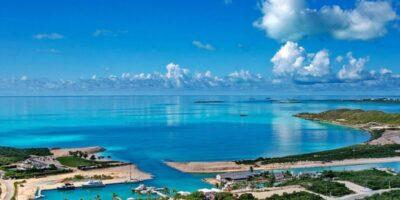
Cover : Partial view of Cap-Haïtien. Photo : tripadvisor
► AyiboPost is dedicated to providing accurate information. If you notice any mistake or error, please inform us at the following address : hey@ayibopost.com
Keep in touch with AyiboPost via:
► Our channel Telegram : Click here
►Notre Channel WhatsApp : Click here
►Our Community WhatsApp : Click here


Comments