
More and more influential individuals accused of crimes are obtaining release on “humanitarian grounds.” Meanwhile, detainees accused of less serious offenses languish in prolonged pretrial detention
At least half a dozen influential individuals held for embezzlement, misappropriation of funds, rape, or links to gangs have been released before trial “for humanitarian reasons” over the past three years in Haiti.
International law and Haitian legislation allow the justice system to authorize a sick detainee to seek medical care. Once the person’s condition has stabilized, the accused should place themselves at the disposal of the courts.
Yet release on humanitarian grounds often allows influential defendants to evade justice, according to specialists. These defendants are generally not escorted by police to the hospital and disappear after their release.
This fast-track release procedure for influential people stands in contrast to the continued use of prolonged pretrial detention for the vast majority of the country’s prisoners. Of the 7,200 inmates in the prison system, more than 80 percent are awaiting trial, some of them for years.
In many cases, this amounts to a “disguised release” granted at the sole discretion of the investigating judge, even against the opinion of the public prosecutor, criminal law professor Frantz Gabriel Nérette told AyiboPost.
Release on humanitarian grounds often allows influential defendants to evade justice, according to specialists. These defendants are generally not escorted by police to the hospital and disappear after their release.
The attorney, who also teaches at the Port-au-Prince bar, is calling for the introduction of security measures currently absent from the country’s legislation to counter the abuse of similar requests, technically known as mainlevées d’écrou (orders lifting detention).
The former director of the Social Assistance Fund, Edwin Tonton, is accused of corruption, embezzlement, and overbilling also involving her chief accountant, Pierre Richard Valès, in a report by the Anti-Corruption Unit (ULCC) published on March 3, 2023.
In his committal order, the investigating judge Jean Wilner Morin, then in charge of the case, had retained charges against six people, including Tonton and the former Minister of Social Affairs and Labor, Pierre Odney Ricot.
On August 21, 2024, Tonton and Valès were released on “humanitarian grounds,” about fifteen months after their arrest.
Last month, Judge Mathieu Chanlatte released the former mayor of Arcahaie, Rosemila Petit-Frère, for medical reasons.
Petit-Frère is accused of conspiracy against the internal security of the state, criminal association, and alleged links with armed groups. She is also under investigation by the examining magistrate’s office following a report from the Central Financial Intelligence Unit (UCREF). Arrested in August 2025 in the Dominican Republic, she was handed over to the Haitian authorities.
According to her lawyer, Jean Riboul Casimir, Petit-Frère must undergo neurosurgical procedures abroad. “She will answer questions once her health condition is stable,” Me Casimir added.
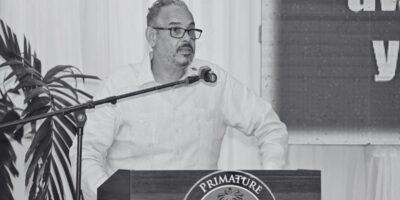
Cholzer Chancy, former president of the Chamber of Deputies in 2016, regained his freedom on “humanitarian grounds” on March 27, 2024, after two months in detention, after being heard by Judge Merlan Bélabre in the case concerning the diversion of public assets at the National Equipment Center (CNE).
At this stage, the case has stalled. No statement has been published on the matter. Judge Merlan Bélabre, who was responsible for investigating the case, has been suspended for three months since May 20, 2025.
The investigating magistrate is accused of having granted provisional release to two individuals accused of serious crimes in clear violation of the Code of Criminal Procedure.
He personally released on humanitarian grounds in December 2024 the school director, René Toussaint, accused of raping a 15-year-old student at his institution.
Bélabre did not even communicate the case file beforehand to the government commissioner for an opinion, a violation of the provisions of the Code of Criminal Procedure.
Haitian laws must evolve, specialists insist. They grant broad discretion to the judge regarding the grounds for granting such releases, notes Judge Marthel Jean-Claude.
For his part, Me Samuel Madistin, of the Je Klere Foundation, points to confusion in the current legislation.
The Code of Criminal Procedure provides that a lifting of detention may be granted regardless of the nature of the offense.
But the law repressing kidnapping and sequestration prohibits granting release to defendants prosecuted for that crime, which constitutes “an anomaly,” according to Me Madistin.
By : Fenel Pélissier
Cover | Photo of Cholzer Chancy, former president of the Chamber of Deputies in 2016. Source : holzer Chancy FaceBook
► AyiboPost is dedicated to providing accurate information. If you notice any mistake or error, please inform us at the following address : hey@ayibopost.com
Keep in touch with AyiboPost via:
► Our channel Telegram : Click here
►Notre Channel WhatsApp : Click here
►Our Community WhatsApp : Click here





Comments